

Guardians of Memory
Publié le 21/05/2026
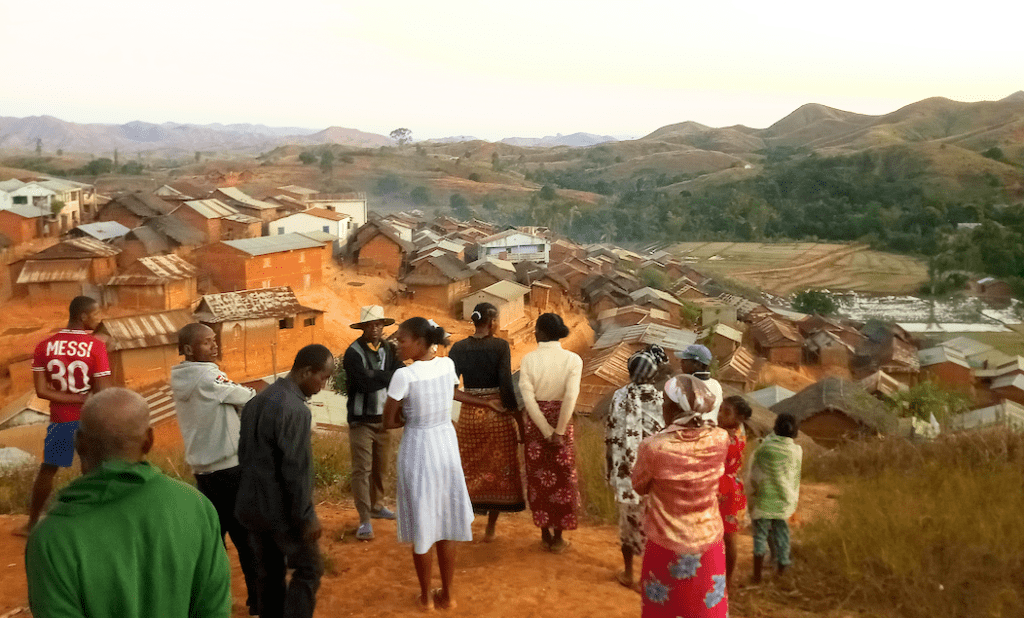
Avec des fidèles dans la région de Mandritsara.
There was a time when Madagascar’s memories were not written down. They were sung, recited by firelight, whispered in huts, proclaimed during solemn speeches (kabary). They lived in the voices of the elders, in the genealogies that were recited flawlessly, in the proverbs — known as ‘ohabolana’ — that encapsulated the wisdom of centuries. The Red Island belonged to the realm of orality. The spoken word was alive, performative, sacred. It needed no ink to endure. Then came writing. Not that orality ceased, but writing opened a new medium for transmitting information. In fact, the arrival of Christian missionaries in the 19th century — first Protestant, then Catholic — brought about a decisive transformation: the use of the Latin alphabet to write down the Malagasy language, its grammatical codification, and its compilation into a dictionary. This act was not merely religious. It was cultural. It ushered in the era of written memory.
From oral to written form: the birth of historiography
The work of the missionaries of the London Missionary Society at the beginning of the 19th century marked a major turning point. During the reign of Radama I, they developed a transcription of Malagasy into the Latin alphabet and undertook the translation of the Bible, the first book written in modern Malagasy, if we disregard the special case of Sorabe. This choice had immense implications: it gradually unified the written language and fostered the emergence of a literature.
History, which until then had been entrusted to oral tradition, entered the realm of the archive.
Among the great Catholic figures, Father François Callet (1822-1885) occupies a prominent place, having compiled the oral history of the kings into a single book. His viewpoint was both that of a lover of Malagasy culture and that of a missionary, eager to better understand the people to whom he was sent. His monumental work, Tantarany Andriana eto Madagasikara (1878), remains one of the major sources for understanding the history of the Merina, an ethnic group from the capital and the central region of the country. Callet did not invent the traditions he recounted; he collected them from Malagasy scholars and guardians of royal memory. His work illustrates a fruitful paradox: the national history of Madagascar owes its written form, in part, to a foreign missionary.
Dictionaries: securing the language, preserving culture
Missionary work requires thorough learning of the language. Preaching is based on understanding, understanding is based on listening, and listening attentively is based on recording, retaining, and making this new culture one’s own. For this reason, the Catholic priests Étienne Abinal (1812-1889) and Victor Malzac (1813-1884) published the Malagasy-French Dictionary (1888), the fruit of an immense lexicographical endeavour. This dictionary remained a standard reference for nearly a century. Even today, it remains a valuable tool for grasping the historical nuances of Malagasy vocabulary. It was only in the 20th century that Rajemisa-Raolison’s Malagasy Dictionary appeared (published in 1935), which has since become a contemporary reference work. At the same time, another missionary movement played a key role in the study of Malagasy culture: that of the Norwegian Lutherans.
Norwegian missionaries: mission and ethnography
The Norwegian Missionary Society, founded in 1842, sent missionaries to Madagascar from 1866 onward, primarily to the south and west of the island, notably among the Betsileo and Bara peoples. Their work was not limited to purely pastoral care. They undertook an in-depth study of the languages, beliefs, and social structures.
Among these missionaries, Lars Vig (1845–1913) occupies a prominent place. His work, ‘The Religious Concepts of the Ancient Malagasy’, constitutes a remarkable contribution to the understanding of traditional religious beliefs.
In this book, Vig meticulously analysed: the concept of Zanahary (God the Creator) in Malagasy thought; the central role of ancestors (razana) in mediating between the visible and invisible; sacrificial practices; taboos (fady) as moral and social structures; and the implicit cosmology of traditional narratives. What is striking about Vig is his descriptive rigour. Certainly, his perspective remains that of a 19th-century Lutheran theologian, and his analysis may bear the mark of a comparative reading with Christianity. But he demonstrates a genuine interest in understanding Malagasy religious categories from within. We cannot, here, dwell on the remarkable work of each individual, such as that of Lars Nilsen Dahle (1843-1925), who collected tales in his Anganon’ny Ntaolo, which remains a standard reference work and is studied by all Malagasy schoolchildren.
We should also mention the work of British missionaries John Alden Houlder (1845-1925), who collected Malagasy proverbs, and his compatriot William Edward Cousins (1839-1938), who explored Malagasy traditions in his book ‘Fomba malagasy’.
At a time when scientific anthropology was still in its infancy, Norwegian missionaries collected ethnographic data of considerable value: myths, proverbs, customary legal practices, and clan structures. Their extended immersion gave them access to dimensions that colonial administrators did not always perceive. In this respect, they were ethnographers before their time.
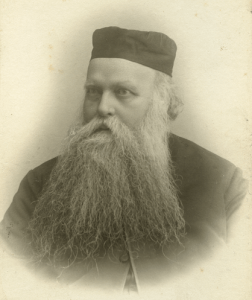
Le pasteur Lars Larsen Vig, missionnaire pour la Norwegian Missionary Society à Madagascar de 1874 à 1902.
Mission, Colonisation and Ideology: memory shaped by history
It would, however, be reductive to idealise this work. Missionary writings were sometimes produced in a colonial or pre-colonial context. They could, unintentionally, contribute to hierarchical interpretations of cultures.
Under French colonial rule (1896–1960), official historiography incorporated certain missionary sources, while reinterpreting them within the framework of the ‘civilizing mission’. After independence, national history underwent further shifts.
Under the presidency of Didier Ratsiraka (1936-2021), particularly during the Second Malagasy Republic (1975-1993), a socialist and Third Worldism orientation led to a critical reinterpretation of the colonial and missionary past. Missions were sometimes equated with imperial enterprises. The writing of history became an ideological battleground. Thus, Malagasy cultural memory has been continually reshaped by successive political contexts: monarchy, colonisation, independence, socialism, and globalisation. A contemporary Pan-Africanist perspective also offers a new, often biased, view on the preservation of history.
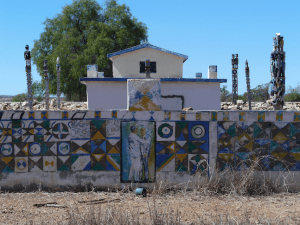
Tombeau d’une ethnie mahafaly.
Contemporary challenges: endangered languages and living heritage
Today, the question arises with renewed urgency. While the average Malagasy citizen has access to a written tradition, many dialectal variations remain largely uncodified. Some ethnic groups still lack a comprehensive dictionary or literary corpus in their own language. Furthermore, questions persist regarding the language of instruction for higher education and the mixing of official Malagasy and French with the well-known ‘vary aman-anana’ (a blend of Malagasy and French). Yet, according to UNESCO data, indigenous languages are disappearing at an accelerated rate worldwide. With them, worldviews, classifications of living things, and ritual memories vanish. The simple study of foundational Malagasy rites, such as circumcision, reveals ethnic differences and worldviews within the same nation. The Antanosy or Antandroy of the South do not perceive the world in the same way as the Merina or Betsileo of the central region. In this context, the Christian mission, in its search for and love of the culture of the country to which it is sent, can rediscover a unique relevance, both in its external and internal perspectives. Thus, it can encourage biblical translation into local dialects, support the compilation of dialect dictionaries, digitize old missionary archives, and study local culture more deeply and afresh, while also training researchers capable of continuing ethnolinguistic investigations themselves. The question then becomes as much theological as cultural: how to proclaim the Gospel without impoverishing identities? How to discern, purify, and fulfil without destroying?
History shows that missionary work sometimes caused harm. But it also shows that it saved entire sections of cultural memory from oblivion. From dictionaries to transcripts of stories, from descriptions of ritual practices to the promotion of inculturated Christian art, missionaries were often the first archivists of local cultures.
Theological perspectives, inculturation and ‘seeds of the Word’
The Second Vatican Council (1962-1965) focused on the theology of mission. In the decree Ad gentes (1965), the Church affirms that everything that is true and good in cultures can be taken up, purified, and elevated by the Gospel (Ad gentes, no. 11). This insight is rooted in the older doctrine of semina Verbi — the ‘seeds of the Word’ — already formulated by Justin Martyr (c. 100-165): God has sown seeds of truth among peoples, preparing them for the revelation of Christ.
In Madagascar, beliefs in a Creator (Zanahary), respect for the razana or the moral structures taught by the fady, can be interpreted in this light. The mission does not come to an empty earth; it encounters a spiritual history already worked by the Spirit. Therefore, preserving languages and traditions – including dialects that are still little codified – is not a simple gesture relating to heritage: it is recognizing that each culture can become a place where the Word becomes flesh.
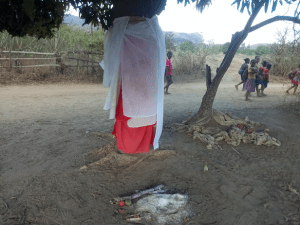
Tournée dans la région de Mandritsara.
Memory, Gospel and the Future
In the recent past it was writing, introduced by missionaries, that enabled Madagascar to enter a new era, moving beyond a purely oral tradition. Today, faced with global cultural erosion, missions can become partners in safeguarding living heritage. When missionaries appreciate a culture profoundly, they then want to share it with others. They want to delve deeper into the culture and its way of life and, ultimately, to make it their own.
The challenge is not to make enemies of evangelisation and culture, but to connect them. A people’s memory is no obstacle to the Gospel; it is the very place where the Gospel can take root. Preserving a language, a culture, means preserving a way of being in the world. And, paradoxically, this may be one of the most relevant forms of mission today.
Fr. Jérémy Favrelière, MEP
